





ORGANS OF PARIS © 2026 Vincent Hildebrandt HOME ALL ORGANS


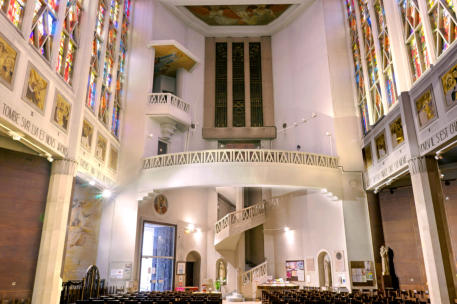
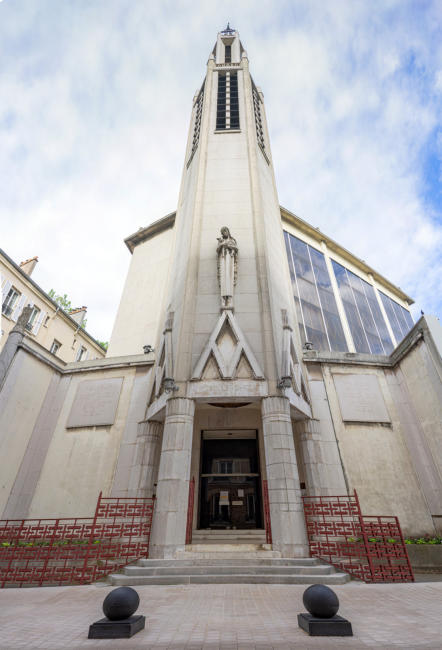
The building was constructed between 1932 and 1933
by the architects Marc Brillaud de Laujardière, winner
of the Prix de Rome in 1920, and Raymond Puthomme,
who drew inspiration from the church of Notre-Dame
du Raincy. It was listed as a historic monument in
1984.
The two architects achieved the remarkable feat of
transforming a cramped, enclosed site with awkward
geometry into a luminous architectural setting in the
purest Art Deco style, demonstrating complete
mastery of the new techniques of reinforced concrete.
Another achievement lies in the close collaboration
between the architects and the artists, resulting in a
coherent and unique ensemble, imbued with
modernity in both art and faith, and marking a renewal
of Christian iconography.
In this sense, the church of Sainte-Agnès in Alfort is
considered to come close to the ideal of a “total work
of art.”
Source : Wikipedia
C1
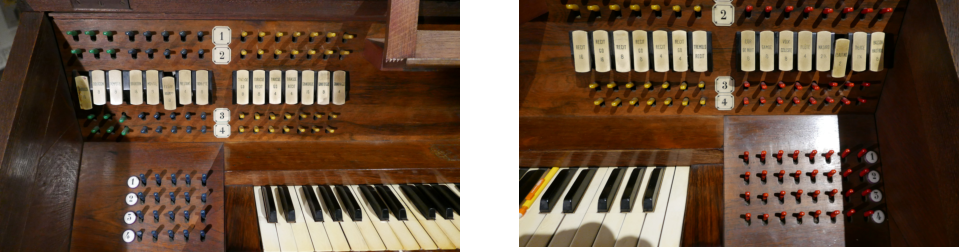
The organ of the Cavaillé-Coll House was installed at its
current location by Isambert between 1934 and 1936.
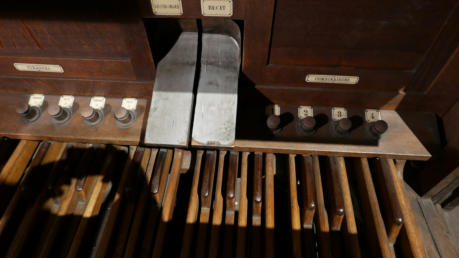
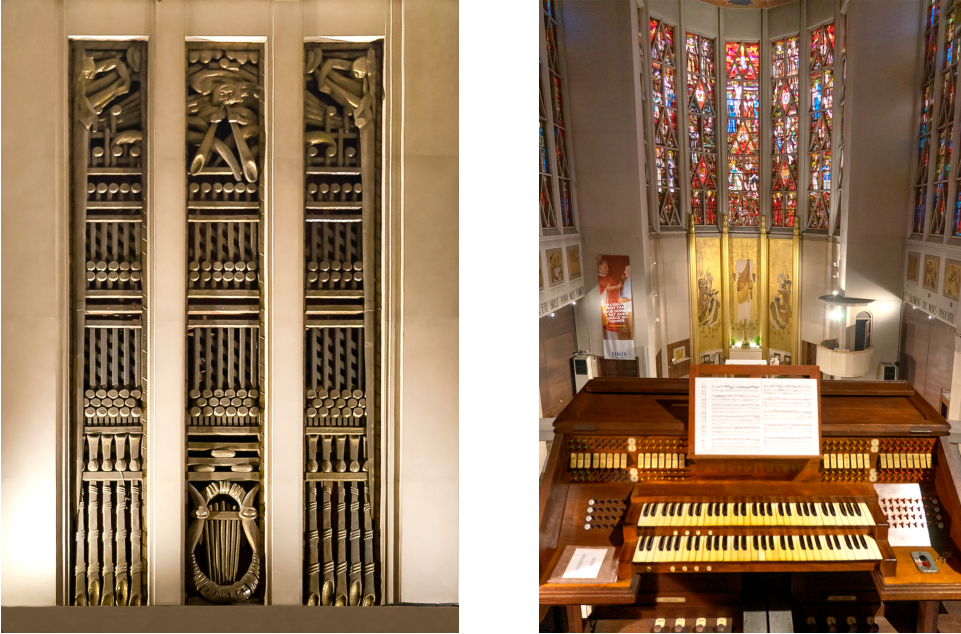
The console (of Isambert) is located in the center of the
gallery, facing the choir (previously installed on the small
left stand).
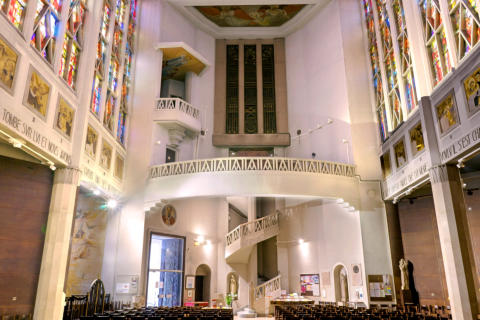
The organ is "invisible", in fact hidden behind a
decorative façade, work of Richard Desvallières, in gilded
bronze with marble frame. The organ case presents in
the lower part a lyre and trumpets and at the top an
angel playing a double trumpet, accompanied by two
other angels who raise a curtain thus discovering the
table of notes.
Source: Association des Amis de Sainte-Agnès d'Alfort



1930 - Ets Cavaillé-Coll (1)
1936 - Isambart (5)
II/16 (13) - traction électro-pneumatique
composition
Titular organist
-
Parish website
Video
Eric Lebrun & Marie-Ange Leurent
Photos
Didier Hugon
Console : Vincent Hildebrandt








Organs of Paris


ORGANS OF PARIS © 2026 Vincent Hildebrandt
C1
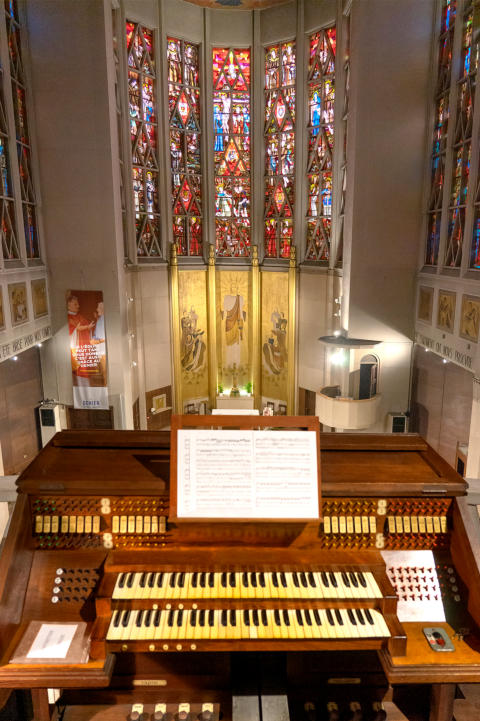
The organ of the Cavaillé-Coll House was installed at its
current location by Isambert between 1934 and 1936. The
console (of Isambert) is located in the center of the gallery,
facing the choir (previously installed on the small left
stand).
The organ is "invisible", in fact hidden behind a decorative
façade, work of Richard Desvallières, in gilded bronze with
marble frame. The organ case presents in the lower part a
lyre and trumpets and at the top an angel playing a double
trumpet, accompanied by two other angels who raise a
curtain thus discovering the table of notes.
Source: Association des Amis de Sainte-Agnès d'Alfort
1930 - Ets Cavaillé-Coll (1)
1936 - Isambart (5)
II/16 (13) - traction électro-pneumatique
composition
Titular organist
-
Parish website
Video
Eric Lebrun & Marie-Ange Leurent
Photos
Didier Hugon
Console : Vincent Hildebrandt
